
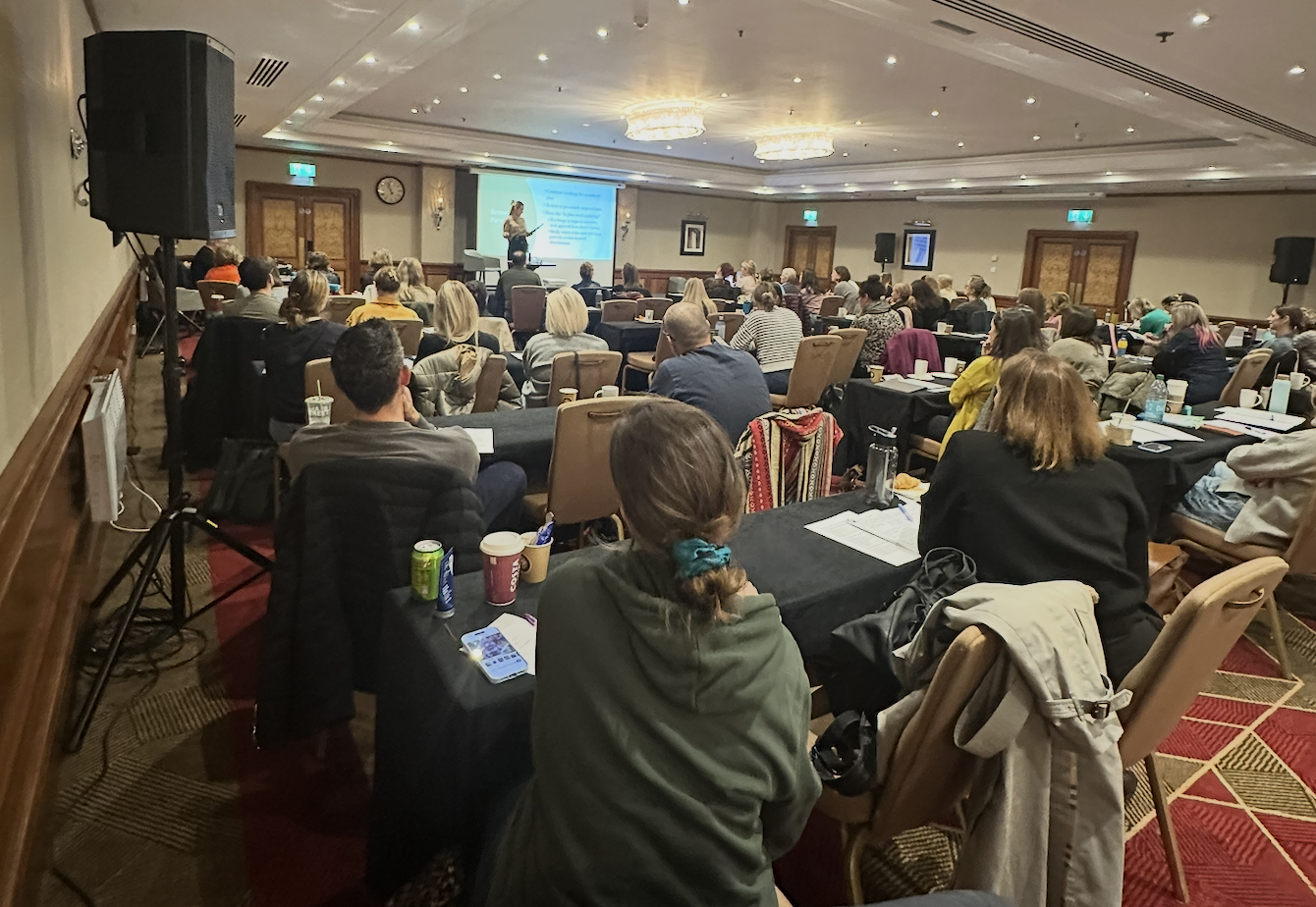
Team Training & Presentations
Virtual learning tailored to your clinical team.
Looking for a presenter for your next lunch-and-learn, staff development meeting, or clinical training?
I offer virtual presentations, Q&A sessions, consultation groups, and workshops for group practices, agencies, and behavioral health organizations. Topics include IFS, EMDR, and the integration of these models, with content tailored to your team’s experience, interests, and clinical needs.
Whether your clinicians are learning something new or deepening established skills, we can create an experience that gives them practical ideas to bring into their work.

Presentation & Training Options
60-minute overviews: Introduce a model or explore a focused clinical topic.
One- to two-hour presentations: Take a closer look at selected topics, with space for discussion and questions.
Open Q&A sessions: Bring your team’s questions about IFS, EMDR, or integrating the models.
Clinical consultation groups: Explore case conceptualization, clinical questions, and ways to move the work forward.
Half-day workshops and trainings: Deepen understanding through instruction, discussion, exercises, and demonstrations.
Full-day workshops and trainings: Create a more comprehensive learning experience around your team’s goals.
Depending on the topic and format, sessions may include lecture, discussion, experiential exercises, and demonstrations.
Topics We Can Explore
IFS Foundations & Clinical Applications
An introduction to IFS, parts, and Self energy
Understanding and working with protective systems
Parts mapping and getting to know parts
Healing and unburdening steps
Legacy and cultural burdens
Recognizing Self energy in practical, accessible ways
Maintaining continuity between sessions
Applying IFS with different clients and clinical needs
Deepening Your EMDR Skills
For EMDR-trained clinicians who want to expand their options, strengthen case conceptualization, and navigate challenging moments with greater confidence.
EMDR case conceptualization: Organizing the clinical picture and developing a treatment plan
Finding target memories and negative cognitions: Moving from presenting concerns to meaningful targets
Expanding Phase 2 options: Broadening preparation and resourcing to fit the client
EMDR with neurodivergent clients: Adapting the work to different processing styles, communication preferences, and sensory needs
Stuck points in Phase 4: Exploring what may be interfering with reprocessing and considering ways forward
These presentations can focus on EMDR practice itself or incorporate IFS, depending on your team’s interests.
Integrating EMDR & IFS
Phase 1: Bringing an IFS lens to history taking, treatment planning, and case conceptualization
Phase 2: Integrating IFS into preparation and resourcing
Phases 3 and 4: Identifying negative cognitions, working with protective parts, and transitioning into and supporting reprocessing
Moving beyond parts mapping and interviewing when the work is ready to progress
Clinical decision-making when sessions feel stuck or complex
EMDR Intensives
Structuring EMDR intensives to fit your practice and clients
Screening, readiness, and determining appropriateness
Case conceptualization, treatment planning, and target selection
Preparation and resourcing for extended sessions
Pacing reprocessing, navigating stuck points, and knowing when to pause
Integrating IFS and neurodivergence-affirming adaptations
Planning for closure, follow-up, and continuity of care
Presentations can range from an introduction to offering EMDR intensives to a focused workshop or consultation for clinicians already providing them.
Therapist Parts & Self-Leadership
Recognizing your own parts in the therapy room
Working with urgency, caretaking, and expert parts
Responding to uncertainty with greater clarity
Remaining connected to yourself while attending to your client
Building greater trust in yourself and your clients
Neurodivergence-Affirming Practice
Applying parts work through a neurodivergence-affirming lens
Making concepts and interventions accessible to different ways of processing
Attending to communication preferences and sensory needs
Adapting clinical work collaboratively with the client
Additional Topics Through My Professional Network
I can also help connect your organization with a trusted presenter for topics including:
Differential diagnosis and overlapping clinical presentations
Autism and ADHD in clinical practice
Recognizing and understanding OCD
Neurodivergence-affirming assessment and care
We’ll discuss your team’s needs to identify the right presenter and focus.
Have another topic in mind? You’re welcome to request a presentation tailored to your team’s interests and clinical setting.
If My Schedule Is Full…
If I’m fully booked, I’m happy to connect you with a trusted colleague whose expertise fits your team’s needs and whose work I can confidently recommend.